

Cultures and Attires of Arunachal Pradesh: A Living Tapestry of Traditions
- Rising Sun

- 21 hours ago
- 4 min read
Arunachal Pradesh often called the “Land of the Rising Sun,” is one of India’s most culturally rich and visually striking states. Tucked away in the north-eastern corner of the country it is home to dense forests, snow-capped mountains, deep valleys and most importantly an extraordinary diversity of indigenous tribes. With more than 26 major tribes and over 100 sub-tribes, Arunachal Pradesh represents a living museum of cultures, languages, customs and traditional attire that have been preserved for centuries. The cultures and attires of Arunachal Pradesh are deeply connected to nature, community life and spiritual beliefs. Every tribe has its own identity, expressed vividly through festivals, rituals, music, dance and clothing. Together they form a colorful tapestry that makes Arunachal Pradesh truly unique.
Cultural Diversity of Arunachal Pradesh
The cultural life of Arunachal Pradesh is rooted in tribal traditions. Each tribe has its own social structure, belief system, and way of life. Despite modernization, many communities continue to follow age-old customs passed down orally through generations.

Tribal Life and Social Structure
Most tribes live in close-knit communities where cooperation and mutual support are central values. Village councils or elders traditionally play an important role in decision-making and conflict resolution. Respect for elders and collective responsibility are common cultural traits across tribes.
Beliefs and Religions
The religious practices of Arunachal Pradesh are diverse. Many tribes follow indigenous animistic beliefs, worshipping nature, spirits, mountains, rivers and animals.
The Tani tribes (Adi, Apatani, Nyishi, Galo) follow the Donyi-Polo faith which worships the Sun (Donyi) and the Moon (Polo). Some tribes practice Buddhism especially the Monpa and Sherdukpen tribes. Christianity has also spread among several communities in recent decades.
Festivals and Celebrations
Festivals are an essential part of cultural expression in Arunachal Pradesh. They are closely linked to agriculture, seasons and spiritual beliefs. Some major festivals include:
Losar (Monpa tribe) : Tibetan New Year
Solung (Adi tribe): Harvest festival
Nyokum (Nyishi tribe) : Celebration of harmony with nature
Dree (Apatani tribe) : Agricultural prosperity festival
These festivals are marked by traditional dances, folk songs, rituals and the wearing of elaborate traditional attire.
Traditional Attires of Arunachal Pradesh
Traditional clothing in Arunachal Pradesh is not just about covering the body it is a symbol of identity, status and heritage. Handwoven fabrics, natural dyes and intricate patterns dominate tribal attire. Most clothes are made using local materials like cotton, wool and plant fibers.
Common Features of Tribal Attire
Handloom weaving is widely practiced, Bright colors and geometric patterns. Use of beads, feathers, shells and animal motifs, Minimal stitching with wrap-around garments. Each tribe has a distinct style that sets it apart from others.
Attires of Major Tribes
The Adi tribe is one of the largest tribal groups in Arunachal Pradesh.
Men wear a sleeveless coat with a loincloth, often carrying traditional swords.
Women wear a wrap-around skirt and blouse decorated with silver ornaments and bead necklaces.
Their attire reflects simplicity combined with bold designs.
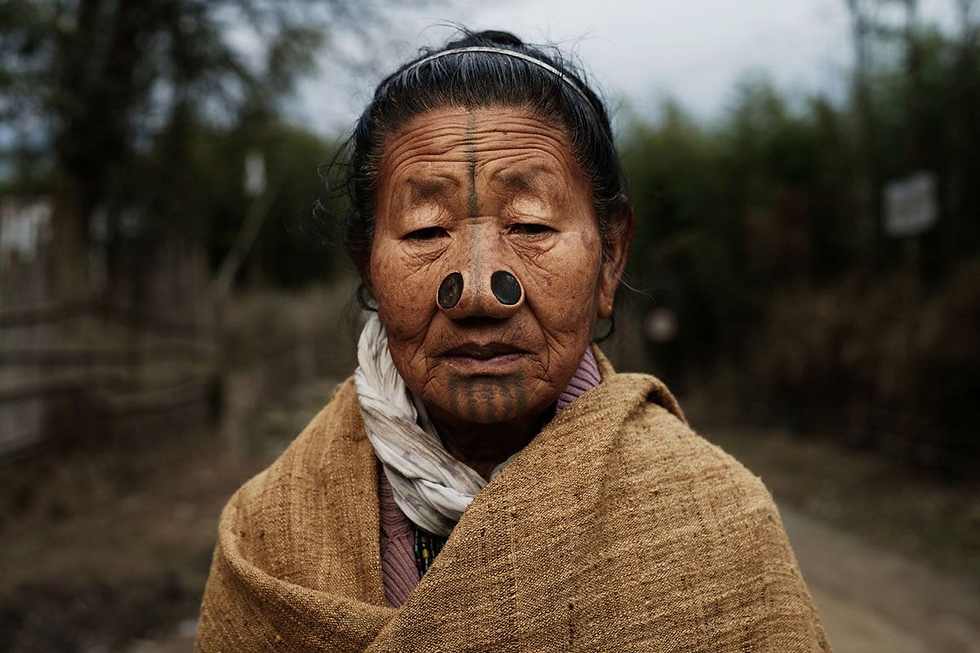
The Apatani tribe is well known for its unique customs and attire. Women traditionally wore nose plugs and facial tattoos (now mostly discontinued). They wear striped skirts and shawls with vibrant colors. Men wear simple sleeveless jackets and cloth wraps. Bamboo hats are common among both men and women.
The Nyishi tribe is famous for its warrior traditions. Men traditionally wore headgear made from cane and bamboo, once featuring hornbill beaks (now replaced by artificial ones for conservation). Women wear colorful skirts, blouses and heavy bead necklaces. Influenced by Tibetan culture, Monpa attire is well-suited to cold climates. Men wear long woolen coats called chuba, tied with a belt. Women wear similar robes with striped aprons and turquoise jewelry. Their clothing reflects elegance, warmth, and spiritual symbolism.
The Galo tribe is known for its striking black and red woven garments. Men wear loincloths and shawls. Women wear wrap-around skirts and sleeveless tops, often accessorized with beads and metal ornaments.
Ornaments and Accessories
Jewelry plays a significant role in Arunachal Pradesh’s traditional attire. Ornaments are made from beads, silver, brass, bamboo, feathers and animal bones. Necklaces, earrings, headbands and armlets are worn during festivals and ceremonies. These ornaments often symbolize prosperity, bravery or spiritual protection.

Cultural Preservation in Modern Times
Modern education, urbanization and globalization have influenced the lifestyle of many tribes. Western clothing is common in daily life today. However traditional attire is proudly worn during festivals, weddings and cultural events. The government and local communities are actively promoting cultural preservation through Handloom and handicraft initiatives Cultural festivals and exhibitions Tribal museums and heritage villages Young generations are also rediscovering their roots, blending tradition with modern fashion.
Conclusion
The cultures and attires of Arunachal Pradesh reflect a deep connection between people, nature and tradition. Each tribe contributes a unique thread to the state’s rich cultural fabric. From vibrant festivals to beautifully woven garments, Arunachal Pradesh stands as a powerful reminder of India’s cultural diversity. Preserving these traditions is not just about honoring the past it is about celebrating identity, sustainability and unity in diversity. In a rapidly changing world the cultural heritage of Arunachal Pradesh continues to shine as a symbol of pride and resilience.


Comments